The 15 Best AI Books to Read in 2026
I have a confession to make: most AI books published today aren’t worth your time.
Not because the topic isn’t important — it’s the most important shift of our careers — but because 90% of them are already obsolete by the time they hit Amazon. “Master ChatGPT in 30 days.” “50 prompts that will 10x your productivity.” By the time you finish the book, the model changed, the UI changed, and half the advice is wrong.
I’ve made this argument before about marketing books: tactics change too fast for a book to keep up. With AI it’s ten times worse. The tactical stuff has a shelf life measured in months.
So here’s the filter I use, and the one behind this list: the best books about AI aren’t the how-to ones. Skip the tactical stuff, and read the people who actually help you think about where this is all going. Not the prompt hackers — the researchers, the lab founders, the economists, the journalists with real access. The people qualified to help you navigate the scenarios ahead: for humanity, for business, and for the way we work.
Full honesty: I haven’t read all fifteen of these. Some I’ve just bought and they’re sitting on my desk. Others are the reading list I’m building for myself, cross-checked against what people far smarter than me keep recommending. I’ve flagged who recommends what, so you can trust the signal and not just my word.
Last updated: August 24, 2026.
What makes an AI book actually worth reading?
Before the list, the same filter I’d apply if you were picking one yourself.
Strategy over tactics
I’ll say it again because it’s the whole point. A book takes 1-2 years to write and publish. Any AI tactic you read in a book today was designed for a model that no longer exists. Books are the wrong medium for tactics — that’s what blogs, docs, and Twitter are for. Books are the right medium for frameworks, history, and the big questions that don’t change every quarter. Every book on this list is here because it’ll still make sense in three years.
Who’s actually holding the pen?
The single best filter for an AI book is the author’s résumé. Did they build a frontier lab? Run AI at a company you’ve heard of? Spend a decade researching this at a top university? Report on it from the inside for years? Or did they just discover ChatGPT last spring and rush out a book to ride the wave?
You can usually tell in one line of the author bio. I’ve picked people with real track records — the kind who get invited into the rooms where this stuff is actually decided.
Future-facing, not “how to use it today”
The books that age well ask what happens next — to jobs, to power, to what it means to be human — not which button to click. That’s the lens. If a book’s core promise expires the next time OpenAI ships, it didn’t make the cut.
The best AI books to read in 2026
These are ordered roughly as a reading journey — from the big picture down to the deep questions — not as a strict ranking. Pick the one that matches the scenario you most want to understand.
The Coming Wave — Mustafa Suleyman
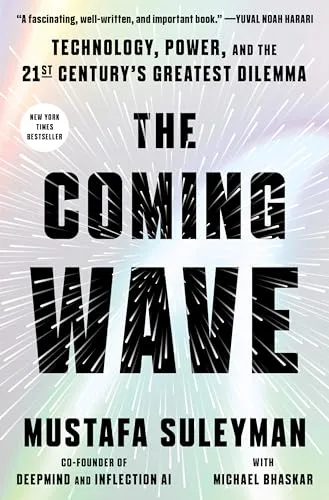
If you read one book on this list, make it this one. Suleyman co-founded DeepMind and Inflection AI and now runs Microsoft AI — there are very few people on earth with a better vantage point on where this technology is heading.
The book’s core idea is containment: how do we capture the enormous upside of AI (and synthetic biology) without losing control of it? It’s neither doom nor hype, which is rare in this space. It’s the sober take from someone who has actually built the thing.
Don’t just take my word for it. Bill Gates calls it his favorite book on AI and says he recommends it more than any other, and it’s on Barack Obama’s personal AI reading list. When Gates and Obama independently point at the same book, that’s signal.
Fair warning: it’s better at scaring you than at telling you what to do about it. Even fans on Goodreads (~4.1) admit it’s long on alarm and thin on fixes, and Suleyman’s “containment” prescriptions feel hand-wavy next to the vividly argued threat. Kirkus still called it “a clear warning from someone whose voice cannot be ignored”, and it landed on best-of-the-year lists at the Economist, FT and Guardian. Read it for the diagnosis, not the cure.
Pages: ~352
Price: ~$15
Year: 2023
Get on Amazon
Nexus — Yuval Noah Harari
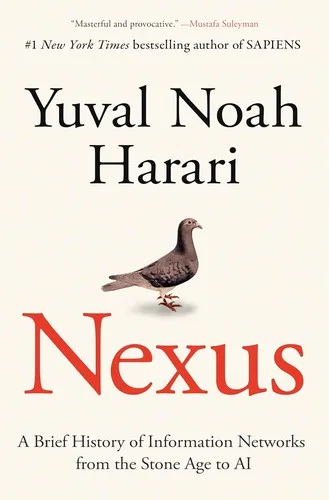
Harari isn’t an AI insider, and that’s exactly why he’s on this list. He’s a historian, and Nexus zooms all the way out: it’s a history of information networks, from stone tablets to algorithms, and what happens to a society when a non-human intelligence starts making the decisions.
If The Coming Wave is the builder’s view from inside the lab, Nexus is the historian’s view from 30,000 feet. Read together, they’re a great one-two punch: how the technology works, and how it fits into the long human story of information and power.
Harari being Harari, you’ll either love the 30,000-foot sweep or find it repetitive and a little alarmist. Goodreads sits around 4.1 with plenty of both camps. The idea worth the ticket price: information isn’t the same thing as truth, and a network that maximizes information can end up maximizing power and order rather than wisdom. My one gripe is the same one the critics raise: calling AI an “alien” intelligence is a catchy frame, but a bit misleading, since this stuff is built from inside our own institutions, not beamed in from space.
Pages: ~528
Price: ~$18
Year: 2024
Get on Amazon
The Infinity Machine — Sebastian Mallaby
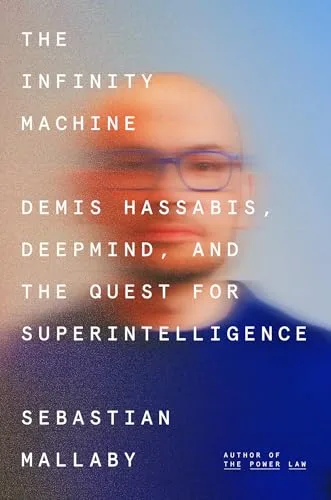
This is the one I just bought. Mallaby is a two-time Pulitzer finalist and the author of The Power Law (the best book on venture capital, in my opinion), and here he turns his access-journalist skills on Demis Hassabis and DeepMind — the lab arguably closest to building superintelligence.
If you want to understand the people and the race behind the AGI headlines — not the tech specs, but the ambition, the culture, and the stakes — this looks like the definitive account. It’s brand new (published March 2026), so I can’t vouch for it yet, but Mallaby’s track record makes it an easy pre-order.
Full disclosure: it’s brand new, so real reviews are still thin. Early Goodreads scores are sky-high (~4.4) but on a tiny sample, and the sharpest criticism is the obvious one. After three years of access to Hassabis, Mallaby writes close enough to his subject that it can tip into hagiography. I’m reading it anyway for the AlphaGo and AlphaFold chapters, which are about as close as we’ll get to a fly-on-the-wall account of how a Nobel-winning lab actually runs.
Price: ~$30 (hardcover)
Year: 2026
Get on Amazon
Empire of AI — Karen Hao
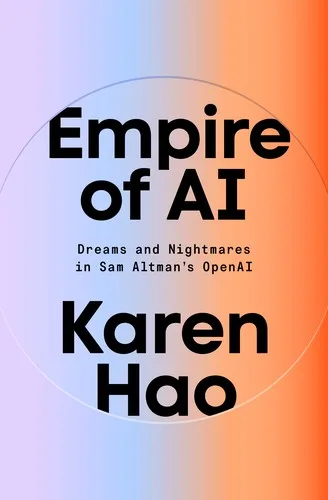
Karen Hao covered AI for MIT Technology Review and the Wall Street Journal, and Empire of AI is the deeply-reported story of OpenAI — the dreams, the money, the power struggles, the human cost. It’s the closest thing we have to a journalistic history of the company that kicked off the current wave.
Where The Coming Wave gives you the optimist-builder’s frame, Hao gives you the skeptical reporter’s frame: who’s accumulating power, at what cost, and who’s paying for it. You need both lenses, and this is the strongest version of the second one.
This is the counterweight to every founder-friendly AI book on the list. Hao’s reporting on the hidden costs, from low-wage data labeling in Kenya and Venezuela to the energy bill, is the stuff the labs leave out of their keynotes, and the NYT called it “excellent and deeply reported”. It’s also long, and the exploitation chapters lean on a handful of heartbreaking individual stories, so you’ll have to judge for yourself how representative they are. Read it precisely because it’ll annoy the optimist in you.
Pages: ~450
Price: ~$18
Year: 2025
Get on Amazon
The Worlds I See — Fei-Fei Li
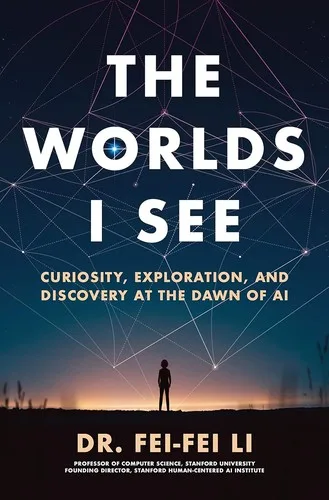
Fei-Fei Li is often called the “godmother of AI” — she created ImageNet, the dataset that arguably lit the fuse on the deep learning revolution, and she co-directs Stanford’s Human-Centered AI institute. This is part memoir, part history of modern AI, told by someone who was in the room for the pivotal moments.
It’s the most human book on this list — as much about curiosity, immigration, and scientific obsession as about the technology. Reid Hoffman (LinkedIn and Inflection co-founder) said he “greatly enjoyed” it, and it’s on Obama’s list too.
Set your expectations first: this is more memoir than manual, roughly 80% immigrant-scientist story and 20% AI, and it basically stops around 2019, before the generative-AI explosion. What it nails is the ImageNet insight that quietly changed everything, that better data (not just cleverer algorithms) is what lit the deep-learning fuse. If you want the human story behind a pivotal moment it’s a lovely read (Goodreads ~4.3); if you want a map of what’s coming next, look elsewhere on this list.
Pages: ~324
Price: ~$19
Year: 2023
Get on Amazon
AI Superpowers — Kai-Fu Lee
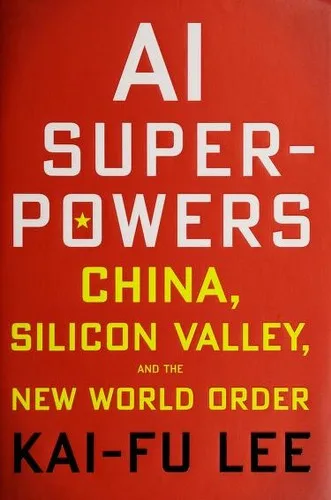
This one’s from 2018, which is ancient history in AI years — but it’s here because the geopolitical frame it introduced has only become more relevant. Kai-Fu Lee ran Google China, worked at Apple and Microsoft, and is now a major AI investor, so he writes with a foot in both the US and Chinese ecosystems.
If you want to understand the US–China AI race — which is now a defining feature of the whole landscape — this is still the starting point. The endorsement list on the cover is almost comical in its heft: Satya Nadella calls it “a must-read,” Marc Benioff calls it “brilliant,” and both Yann LeCun and Max Tegmark vouch for it (see for yourself).
It’s a book of two halves. The first, on AI fundamentals and China’s execution machine, is the best primer of its kind, which is why it still sits around 4.1 on Goodreads years later. The second, on jobs and meaning, is softer and less expert. Read it knowing Lee is bullish on China: critics have long pointed out he skates past the surveillance and IP-theft side of the story. Take the geopolitical thesis, leave the cheerleading.
Pages: ~272
Price: ~$13
Year: 2018
Get on Amazon
The Age of AI — Kissinger, Schmidt & Huttenlocher
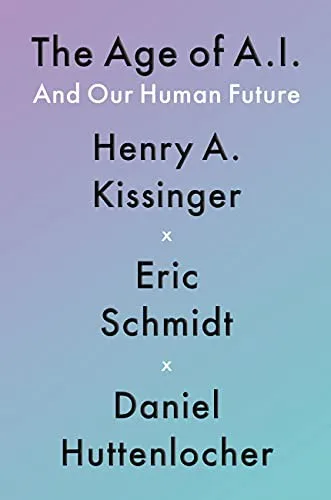
Where else are you going to get a former US Secretary of State, a former Google CEO, and the dean of MIT’s computing college writing a book together? The Age of AI is the statesman’s-eye view: what AI does to diplomacy, security, and the balance of world power.
It’s short and high-altitude — light on technical detail, heavy on the “what does this mean for civilization” questions. If the geopolitics of AI is your angle, this is the most authoritative set of authors you’ll find on it.
This is the lowest-rated book on my list (~3.6 on Goodreads), and I understand why. For a book about the future it spends an awful lot of time in the past, and it asks far more questions than it answers. Foreign Affairs reached the same verdict: big civilizational stakes, few concrete answers. But nobody else in the room has this vantage point, so read it for the questions (AI as a new epistemological force, like the printing press) rather than for a to-do list.
Pages: ~272
Price: ~$15
Year: 2021
Get on Amazon
Power and Prediction — Agrawal, Gans & Goldfarb
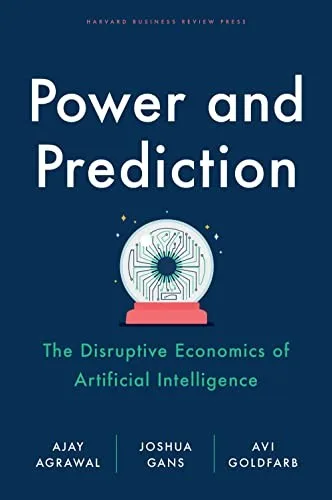
This is the book for the business reader. Three economists from the University of Toronto reframe AI in the language executives actually think in: AI is a drop in the cost of prediction, and when the cost of something falls dramatically, it reshapes entire systems.
Their key insight is that the real disruption isn’t AI as a point solution bolted onto an existing process — it’s the system-level redesign that becomes possible once prediction is cheap. If you’re trying to think strategically about what AI does to your industry, not just your workflow, start here. (Their earlier Prediction Machines is also excellent if you want the foundational version.)
Two honest warnings: it repeats itself, and it barely touches the downsides, so privacy, jobs and power concentration get short shrift. But the core framework earns its keep. The electricity analogy alone reshaped how I think about this: the payoff didn’t come from swapping a steam engine for an electric motor, it came from redesigning the whole factory around cheap power. That’s the gap between bolting AI onto your existing process and actually rethinking the system.
Pages: ~288
Price: ~$22
Year: 2022
Get on Amazon
A World Without Work — Daniel Susskind
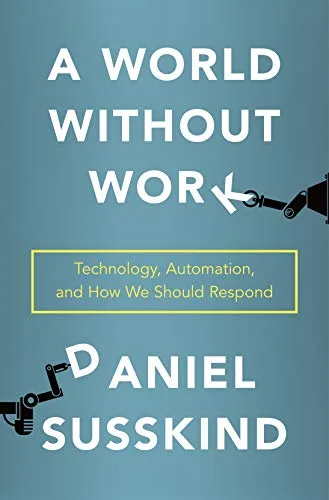
Every AI conversation eventually hits the same anxious question: what happens to jobs? Susskind, an Oxford economist, wrote the most rigorous, least hysterical answer I’ve found. He takes the threat of technological unemployment seriously without descending into either panic or hand-waving reassurance.
It’s the “future of work” book on this list — and notably, it’s a strategic one, not a how-to-stay-relevant listicle in book form. If you manage people or think about where your career goes over the next decade, it’s worth the read.
Susskind’s calm is the whole point: no robots-are-coming panic, no everything-will-be-fine hand-waving. It was shortlisted for the FT & McKinsey Business Book of the Year, and the NYT called it “required reading for any potential presidential candidate thinking about the economy of the future.” The honest caveat, which he’d cop to himself, is that predicting labor markets is guesswork and the “this time is different” claim can’t really be proven. The most interesting third of the book isn’t about jobs at all, it’s about meaning, and what we do with ourselves once work stops being the center of life.
Pages: ~336
Price: ~$18
Year: 2020
Get on Amazon
The Skill Code — Matt Beane
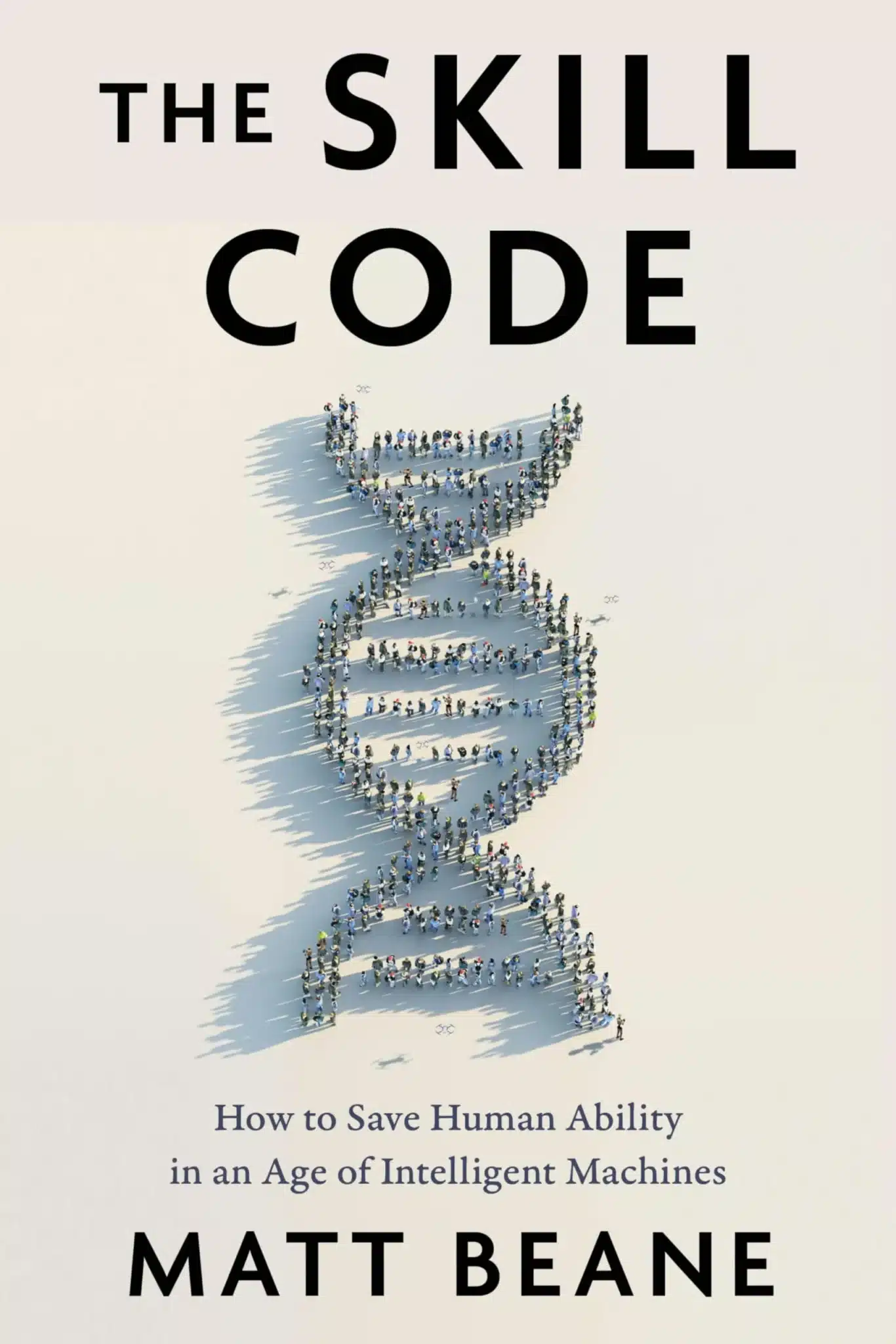
Here’s the question none of the big-picture books really answer: if AI eats the grunt work, how do we stay any good at anything? Beane, a management professor at UC Santa Barbara and an MIT affiliate, spent years shadowing people learning genuinely hard skills — robotic surgeons, warehouse pickers, startup founders — and kept hitting the same quiet problem. The tool that makes an expert more productive usually cuts the novice out of the loop, and the novice is where every future expert comes from.
If Susskind asks whether there’ll be jobs, Beane asks whether we’ll still be good at them — the more useful question if you actually manage people. His “3 Cs” framework (Challenge, Complexity, Connection) is the rare thing on this list you can use on Monday: a checklist for whether the tools you’re rolling out are building skill or quietly hollowing it out.
Set expectations, though: it’s the lowest-rated book on this list (~3.7 on Goodreads), and the gripes are fair. The last stretch drifts into a pitch for Beane’s own startup, and a couple of analogies are sloppy. But the core observation — that we’re optimizing away the messy, shoulder-to-shoulder apprenticeship that actually creates mastery — is one I haven’t been able to shake. Read it for the diagnosis, skim the last chapter; his McKinsey Author Talks interview is a good five-minute preview of the argument.
Pages: ~224
Price: ~$14
Year: 2024
Get on Amazon
Life 3.0 — Max Tegmark
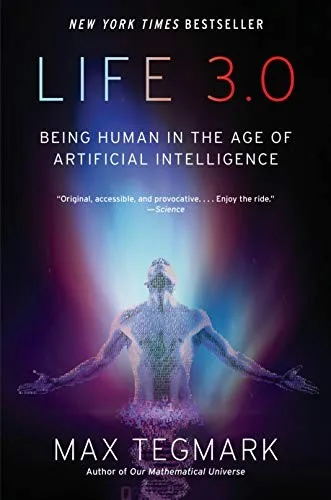
An MIT physicist and co-founder of the Future of Life Institute, Tegmark wrote what is still one of the best on-ramps to the “what happens if this gets really, really smart” question. Life 3.0 is a tour of possible futures — utopian, dystopian, and everything in between — grounded enough to take seriously.
It’s from 2017, but the scenarios it maps out are exactly the ones we’re now living into. Elon Musk recommended it years ago with a line that’s aged well: AI will be the best or worst thing ever for humanity, so let’s get it right.
It’s showing its age (2017) and it’s structurally all over the place. Kirkus called it “manic and chatty”, and the sci-fi vignettes won’t be for everyone. But it did something few books had managed: it got a mainstream audience to take long-term AI safety seriously, and the Life 1.0 / 2.0 / 3.0 framing is still the cleanest way I’ve seen to explain self-improving AI. Skim the cosmic-endowment far-future chapters, keep the framework and the safety argument.
Pages: ~384
Price: ~$13
Year: 2017
Get on Amazon
The Alignment Problem — Brian Christian
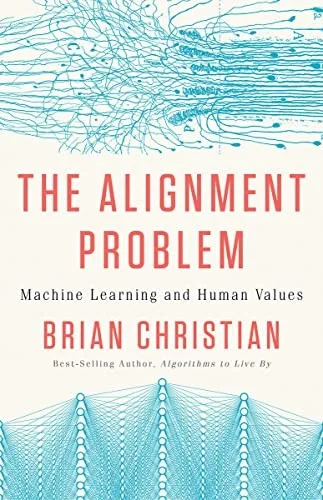
“Alignment” — the problem of getting AI systems to actually do what we want — is the technical heart of the whole safety conversation, and Christian is the best writer working this beat. He turns what could be a dry, academic subject into genuinely gripping narrative, tracing how machine learning systems absorb our values, our biases, and our mistakes.
If the alignment debate feels like inside baseball to you, this is the book that makes it click. It’s the most readable door into the most important technical question in AI.
If Life 3.0 is the mind-expander, this is the rigorous one. Christian did 400-plus interviews and it shows. The book essentially called the bias and hallucination problems everyone is now wrestling with in ChatGPT, years before ChatGPT existed. Fair warning: it reads more like a definitive survey of the field than one punchy argument, which is a feature if you want depth and a bug if you want a single thesis to walk away with.
Pages: ~480
Price: ~$16
Year: 2020
Get on Amazon
A Brief History of Intelligence — Max Bennett
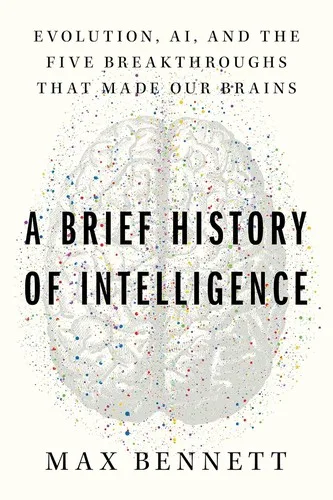
A slightly different angle, and a refreshing one. Bennett, an AI entrepreneur, traces the evolution of intelligence itself — through 600 million years of brains — and uses that deep-time story to illuminate how today’s AI works and where it might go.
It’s the book that helped me think about AI not as a software category but as the latest chapter in a much longer story about what intelligence is. If the philosophical-but-grounded angle appeals to you, this is a standout.
This is the sleeper hit of the list, one of the highest-rated books here (~4.5 on Goodreads) and the one nobody expects to love. Bennett’s move is the “Five Breakthroughs” (steering, reinforcing, simulating, mentalizing, language) that evolution stumbled into over 600 million years, which happen to double as a checklist of what today’s AI still can’t do. Purists will grumble that squeezing half a billion years of neuroscience into five tidy steps oversimplifies some genuinely contested science, and they have a point. It’s still the freshest angle on this whole list.
Pages: ~432
Price: ~$20
Year: 2023
Get on Amazon
Superagency — Reid Hoffman & Greg Beato
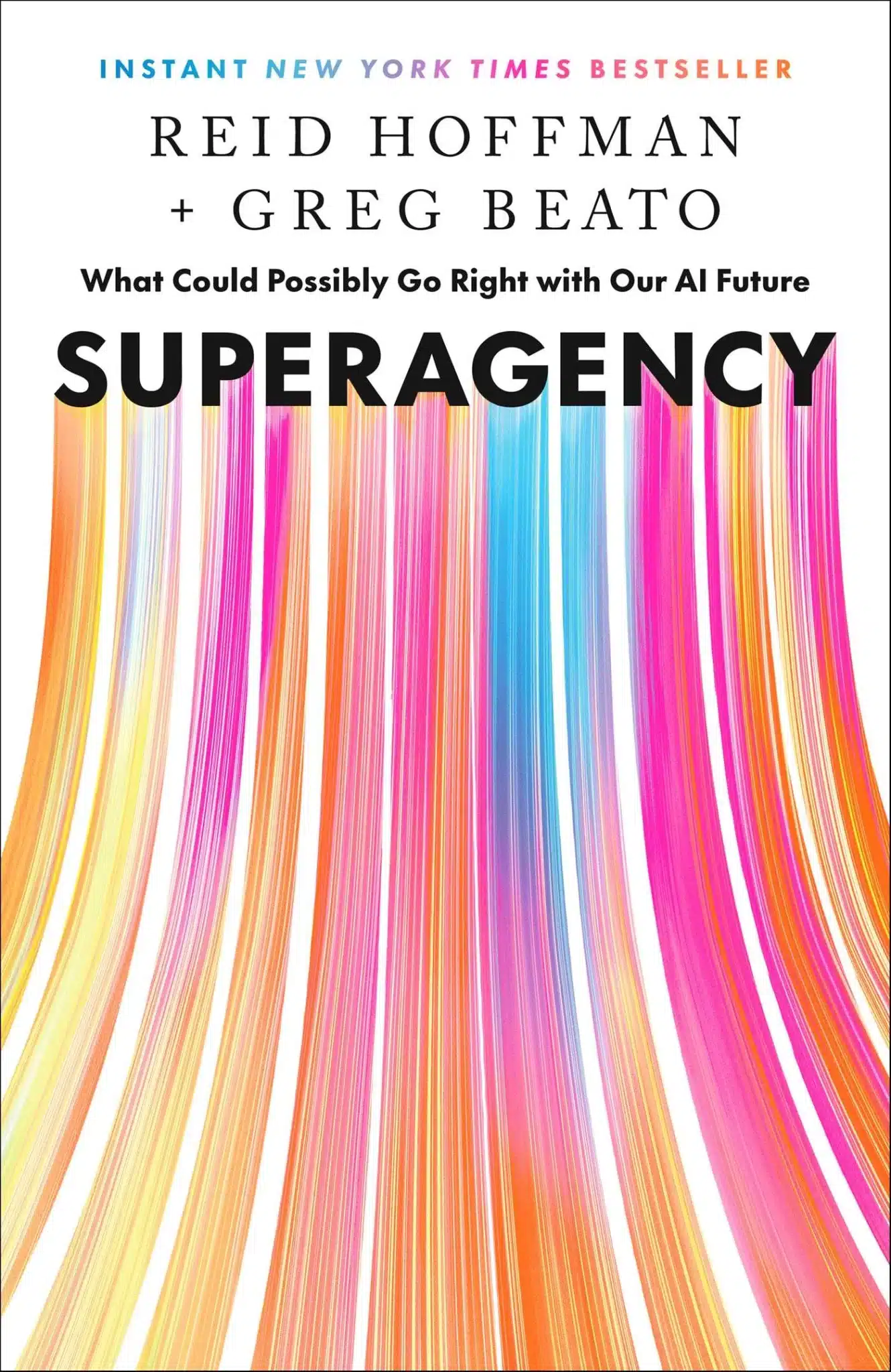
I read this one over the summer, after several AI books that were much more pessimistic about where all this is going. Superagency was a refreshing change. Hoffman and Beato are decisively optimistic: their case is that AI doesn’t have to shrink human agency. Used well, it can amplify it.
“Superagency” here isn’t about autonomous agents taking over the world. It’s the increase in human agency that appears when millions of people gain the same new capabilities at once: personal tutors, medical assistants, researchers, and advisors. The book divides the AI debate into Doomers, Gloomers, Zoomers, and Bloomers; Hoffman is firmly a Bloomer. He argues for iterative deployment: put useful systems in people’s hands, learn from real use, fix what breaks, and let the public help shape the technology as it spreads.
I enjoyed the optimism, although it comes with an obvious asterisk. Hoffman was an early OpenAI investor and co-founded Inflection AI, so this is not a neutral view from outside the industry. Kirkus’s negative review argues that some of the historical parallels are too neat and the case for lighter regulation is underdeveloped, which is fair. Still, after The Coming Wave, Empire of AI, and several other books focused on what could go wrong, I found it genuinely useful to spend 288 pages on the opposite question: what could go right?
Pages: 288
Price: ~$32
Year: 2025
Get on Amazon
The Singularity Is Nearer — Ray Kurzweil
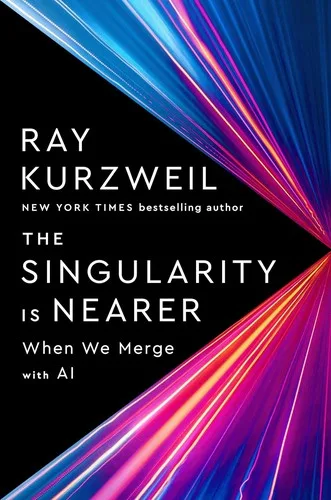
I’ll end with the provocateur. Kurzweil, a longtime futurist and now a director of engineering at Google, is the patron saint of AI optimism — he’s been predicting a merger of human and machine intelligence for decades, and this is his updated case for why “the singularity” is closer than ever.
Read it as a counterweight. You don’t have to buy the timeline (plenty don’t) to find value in a rigorous, unapologetically optimistic vision of the future — especially after a few of the more cautious books above. It’s good to hold both poles in your head.
I put this one last on purpose, and you should read it with an eyebrow raised. It’s the second-lowest-rated book here, Forbes ran a review literally titled “The Singularity Is Nearsighted”, and even sympathetic readers say it hand-waves past the dull reality of adoption. Kurzweil is still betting on AGI by 2029 and the merge by 2045, and he’s relentlessly, almost personally optimistic about not dying. Read it as the optimist pole after a few of the more cautious books above; you don’t have to buy the timeline to enjoy the vision.
Pages: ~432
Price: ~$20
Year: 2024
Get on Amazon
How to actually read this list
Fifteen books is a lot, and you don’t need all of them. Here’s how I’d prioritize:
- If you read one: The Coming Wave. The best single overview from someone who built it.
- For the business/strategy angle: Power and Prediction and A World Without Work.
- For the big-picture, where-is-humanity-going angle: Nexus and Life 3.0.
- For an optimistic counterweight: Superagency and The Singularity Is Nearer.
- For the inside stories: The Infinity Machine and Empire of AI.
And notice what’s not here: no “prompt engineering” manuals, no “get rich with AI” schemes. Those aren’t books, they’re blog posts wearing a hardcover. For the fast-moving tactical stuff, read the web — that’s what it’s for. For the big questions that’ll still matter in five years, read these.
If you want more curated reading lists, I keep a few going: the best marketing books, the best startup books, the best personal growth books, and the best book summary apps for when you’re short on time.
What did I miss? If there’s an AI book that genuinely helped you think about the future — and isn’t just a how-to — let me know. I’ll keep this list updated as I work through my own stack.


